
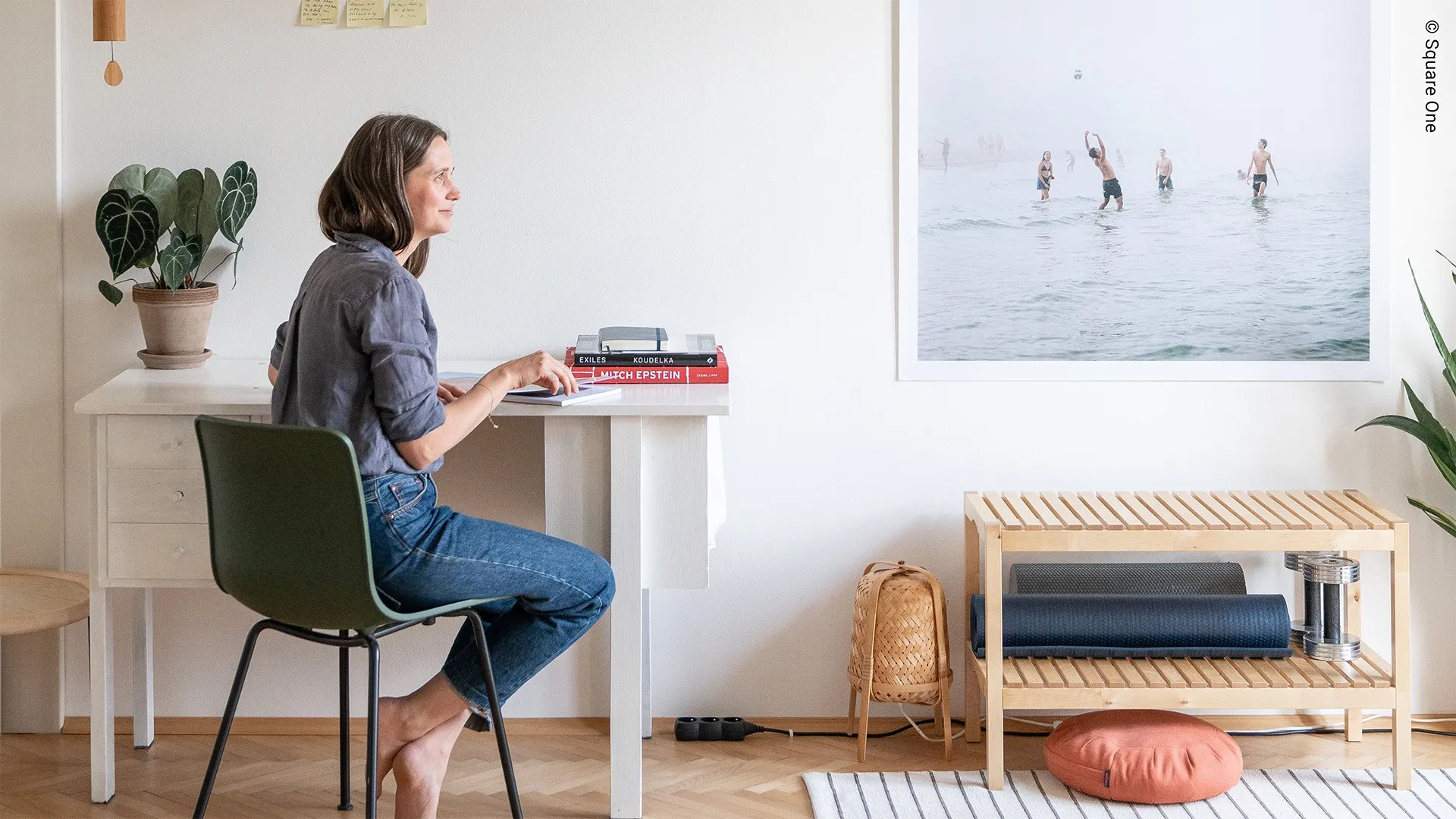
Whether as a permanent workplace or for an hour of focused work in the evening, home offices have long been part of our everyday working lives. According to the microcensus by the Statistisches Bundesamt (Destatis), around a quarter of the working population (25 per cent) in Germany works from home regularly or on a daily basis. This equates to around ten million working people. When setting up a home office, two things are usually the main priorities: ergonomics and design. However, one factor that can neither be seen nor smelled also deserves attention: indoor air quality. After all, if you are spending many hours at a desk, you should not only be sitting comfortably but also breathe in as few harmful substances as possible.
Wall paints, floor coverings and furniture can release volatile organic compounds into the indoor air over a prolonged period of time. Anyone redesigning or furnishing their working room can thus take environmental and health standards into account right from selecting their products. The Blue Angel, the German federal government’s ecolabel, provides reliable guidance here.
5 steps to creating a low-emission home office
1. The basis for good indoor air quality
Walls and floorings influence the quality of indoor air, as they cover large areas and can release harmful substances. Wall paints can contain, among other things, solvents, preservatives or plasticisers that can cause health problems. Paints and floor coverings with the Blue Angel fulfil strict requirements on emissions and harmful substances. Emulsion paints, for instance, are subject to requirements on preservatives, while floor coverings such as parquet, laminate, linoleum and rubber undergo odour testing under the new criteria. This is the first step in helping create a healthier indoor environment when renovating.
2. It’s what’s on the inside that counts
A beautiful desk and a comfortable chair make your home office cosy. But what’s on the inside also counts: wood-based materials can release formaldehyde, and some upholstered furniture contains halogenated flame retardants. Furniture with the Blue Angel meets strict emission limits and does not contain certain hazardous chemicals. When it comes to wooden furniture, the wood comes from sustainable, legal forest management. Longevity is also important: the criteria take into account the availability of spare parts.
3. Choosing technology and consumables carefully
Printers, computer accessories and paper are basic essentials in many workplaces. However, printers can release particulate matter, ozone and volatile organic compounds. Devices with the Blue Angel thus meet strict requirements on their emissions and energy efficiency. Paper, too, deserves a closer look: recycled paper made from 100 per cent waste paper conserves resources and requires significantly less energy and water to produce compared to virgin fibre paper. A small decision in everyday office life can therefore contribute to resource conservation.
4. Guidance instead of guesswork
Whether wall paints, office chairs or printers: anyone comparing products will soon come across a variety of environmental and health claims. Independent ecolabels help you navigate the range of products available. The Blue Angel indicates products and services that fulfil strict criteria. The entire life cycle of the products is taken into account here – from their production and use through to their disposal and recycling. This makes purchase decisions easier – and sustainable characteristics become more transparent.
5. High-quality furnishings, longer use
An environmentally friendly home office is not only created by choosing low-emission materials. The service life of the furnishings is also important. Furniture that can be repaired and devices that work in an energy-efficient way help to conserve resources. This is why, when making a purchase, it is worth paying attention not only to the price and design, but also to quality, repair options and spare parts. If something can be used for a long time, it will need to be replaced less often – making your furnishings more sustainable in the long run.