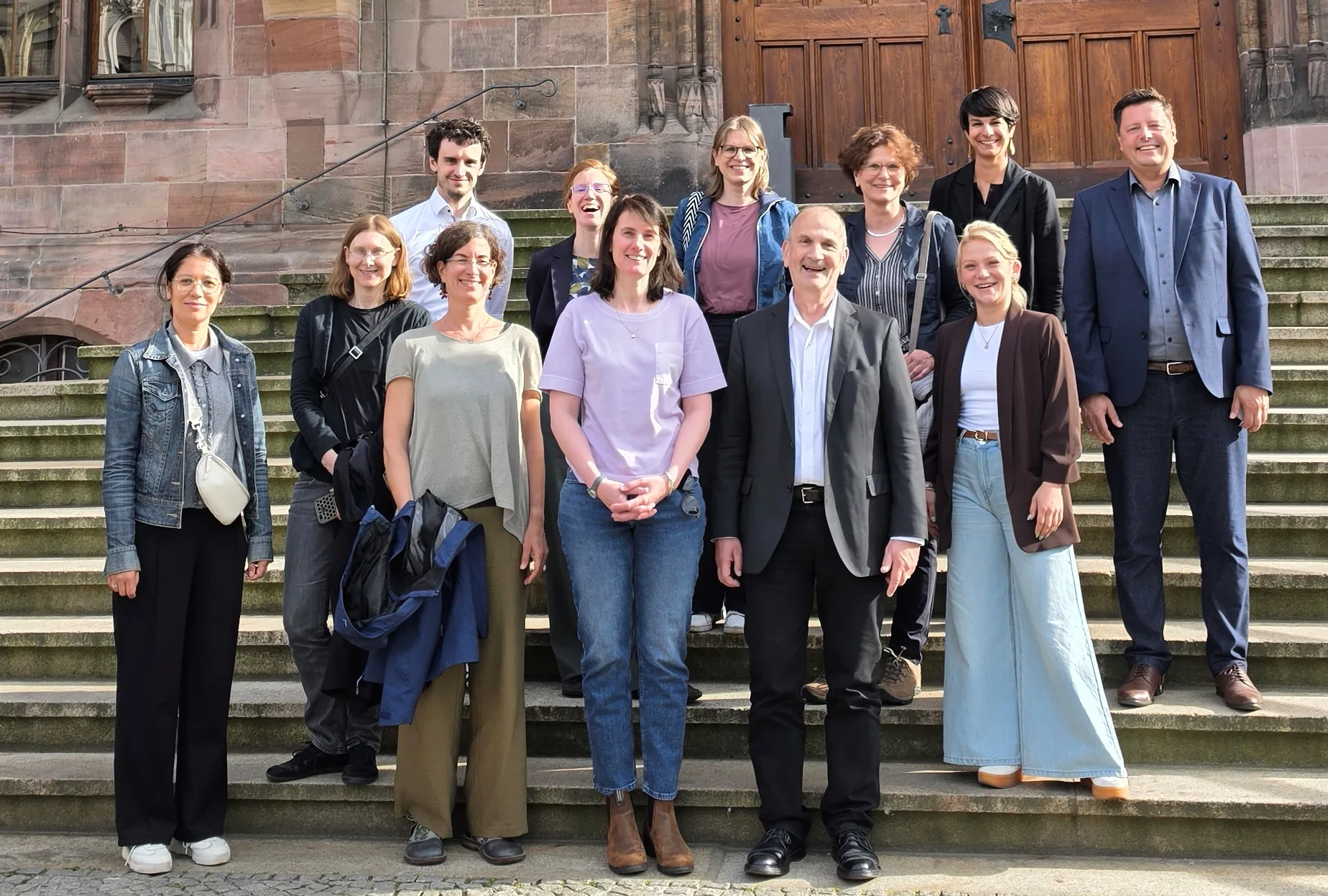
The Environmental Label Jury decides for which product groups and service sectors the Blue Angel should be awarded or withdrawn. It also discusses and determines the respective Basic Award Criteria developed by the German Environment Agency.
The criteria for the following Blue Angel ecolabels have been revised:
- Low-Emission Thermal Insulation Material and Suspended Ceilings for Indoor Use (DE-UZ 132)
- Data Centers (DE-UZ 228)
- Office Equipment with Printing Function (Printers and Multifunction Devices) (DE-UZ 219)
The Basic Award Criteria for these product groups will be finalised in the coming weeks and made available at www.blauer-engel.de/en/certification/basic-award-criteria. Manufacturers of particularly environmentally friendly products can then apply for the label.
A certification procedure for video conferencing devices has also been withdrawn by the jury and office booths have been removed from the scope of validity of the ecolabel for furniture (DE-UZ 38). An assessment is underway with regard to developing a separate ecolabel for office booths.
Further information on the revisions:
Low-Emission Thermal Insulation Material and Suspended Ceilings for Indoor Use, DE-UZ 132
Thermal insulation materials make a crucial contribution to saving energy and improving energy efficiency in buildings. The ecolabel ‘Low-Emission Thermal Insulation Material and Suspended Ceilings for Indoor Use’ can be used to label products that have a lower environmental impact than required by law. One key aspect of the criteria is reducing indoor pollutant emissions. The products must not contain any hazardous substances that could be harmful to health indoors or significantly disrupt the circular economy during recycling. When updating the criteria, particular attention was paid to revising the requirements on the origin of raw materials, the constituents and the emission behaviour of the insulation material, and requirements regarding the circular economy (take-back schemes) and aggregate indicators (GWP thresholds) were introduced. The scope of validity currently comprises insulation material made from mineral and renewable raw materials.
The explanatory box states:
- low emission (or low emission and low odour, if the odour test is passed)
- low pollutant content
- safe with regard to health in the home
Data Centers, DE-UZ 228
The data centre market is currently growing rapidly, especially due to advancing digitalisation and developments in the AI sector. As a result, the number and size of data centres are growing, as are energy consumption and the demand for further resources, such as water, space and important raw materials. Germany is maintaining its position as Europe’s biggest data centre location, which it is continuously expanding. In view of the huge investments flowing into the construction of data centres in Germany in the coming years, sustainable concepts to minimise environmental impacts are more necessary than ever.
The Blue Angel helps to systematically implement climate protection and resource conservation goals in data centres. It offers clear criteria that take all relevant subareas into account. The aims of the ecolabel are to reduce energy consumption, use IT and building technology more efficiently, and create transparency. The following requirements have been revised: more specific information on water needs, stricter requirements on the use of waste heat and renewable energies, exclusion of on-site energy provision with fossil energy sources, consideration of small data centres in the minimum requirements for energy efficiency key figures, and the introduction of a new IT utilisation key figure.
Particularly when data centre services (e.g., web hosting, rental of data centre space) are procured in the public sector, the Blue Angel is sought and serves as a guide. The criteria have already become standard when sustainable data centres are being planned.
The explanatory box states:
- energy efficient
- transparent reporting
- natural, climate-friendly cooling agents
Office Equipment with Printing Function (Printers and Multifunction Devices), DE-UZ 219
Printers and multifunction devices are complex pieces of equipment with a broad range of functions and are used on a daily basis both privately and in a working environment. Devices with the Blue Angel feature low energy consumption, thereby making an important contribution to climate protection. They fulfil strict requirements on pollutant content, pollutant and noise emissions, and a recyclable design, which reduces environmental impacts and health risks. Manufacturers must also comply with social and environmental standards within their supply chains. In the current revision, the scope of validity has been expanded to include used devices, the use of recycled materials has been increased, the reusability of ink and toner modules has been ensured, and the requirements on the use of chemicals and social sustainability within production have been tightened. The creation of the Product Carbon Footprint has been introduced as a new criterion to monitor methods and values.
The explanatory box states:
- low energy consumption
- low emissions and noise
- recyclable design